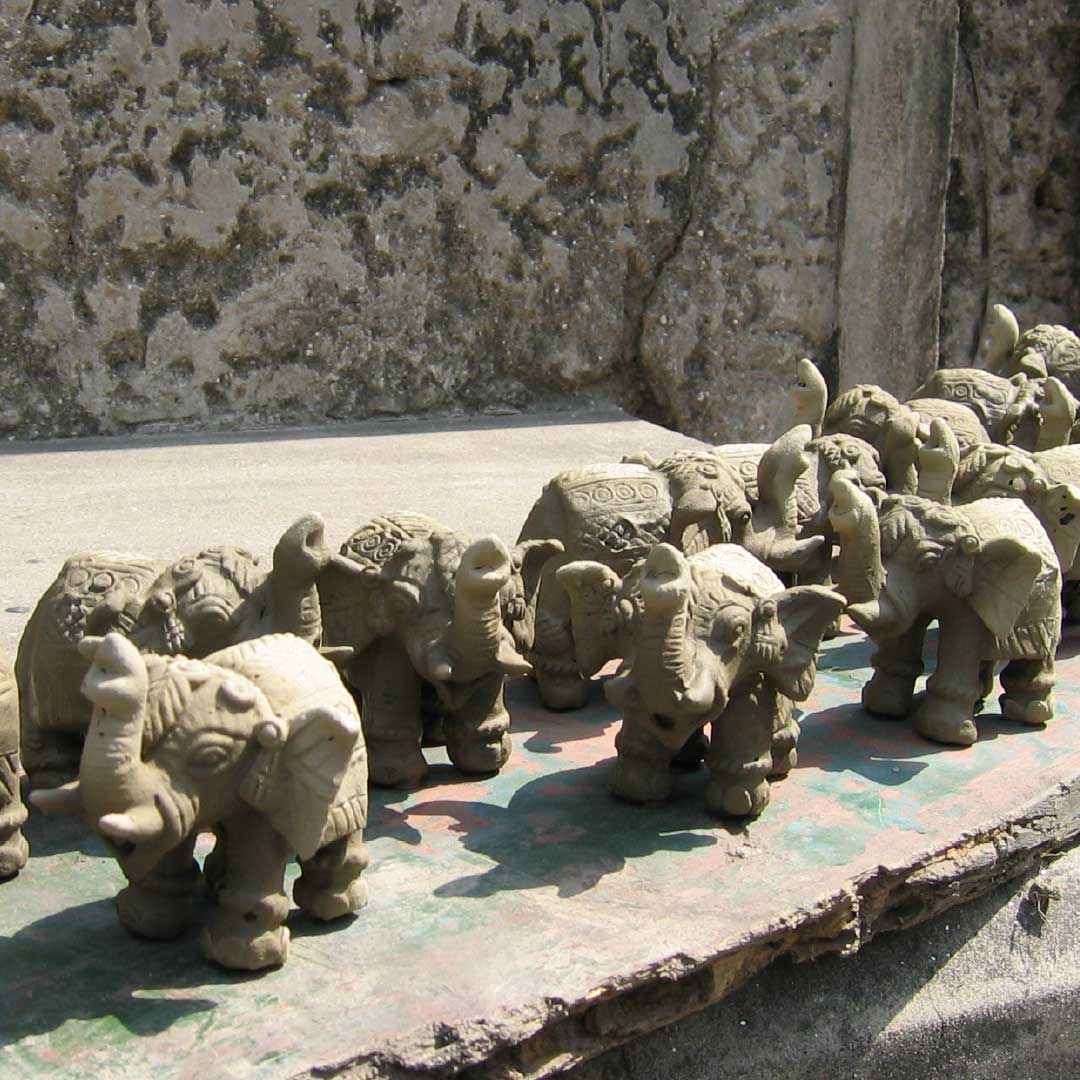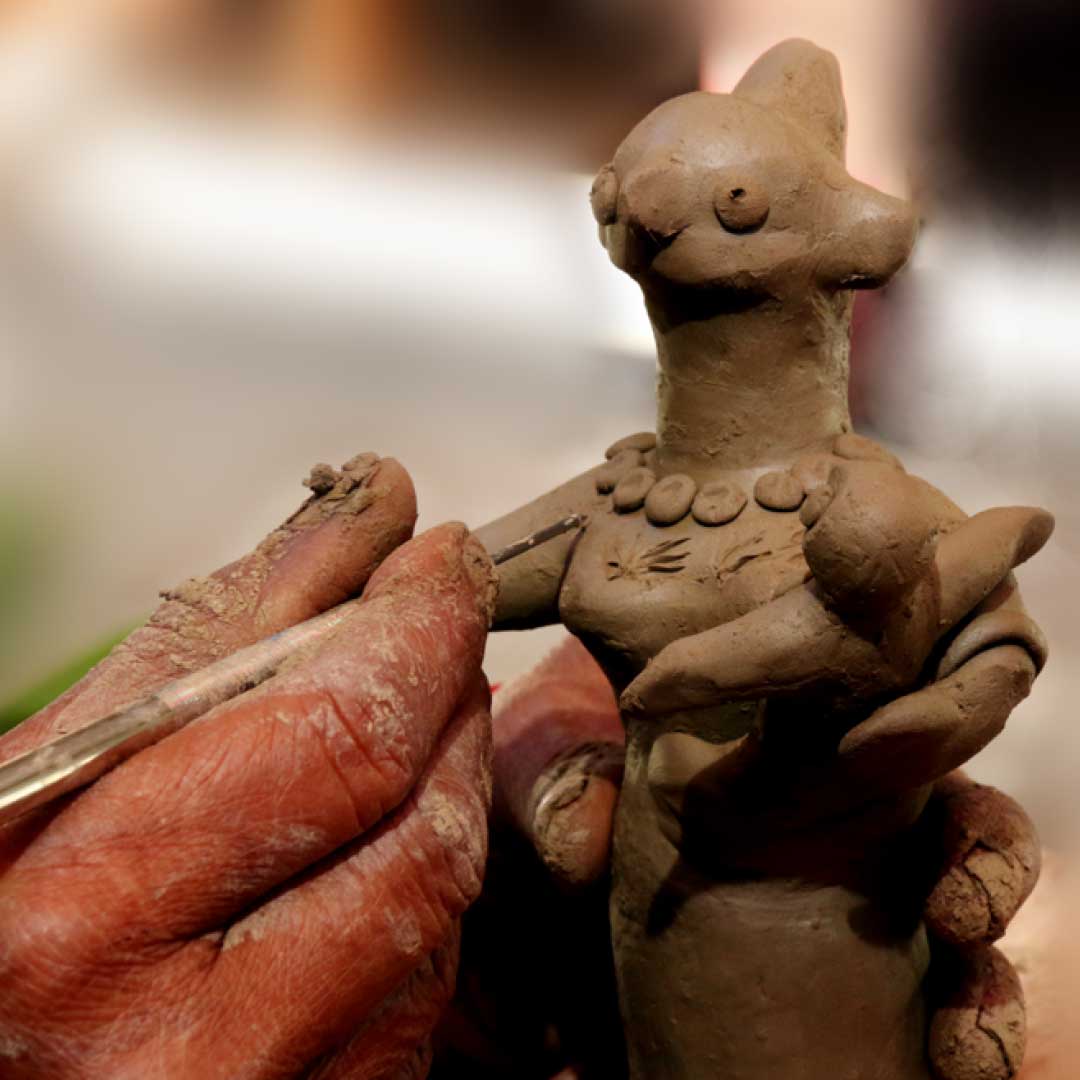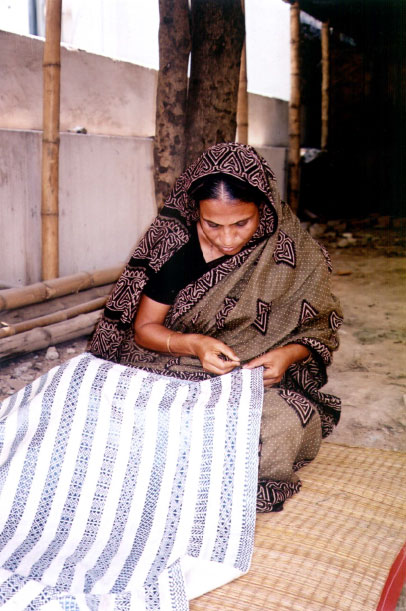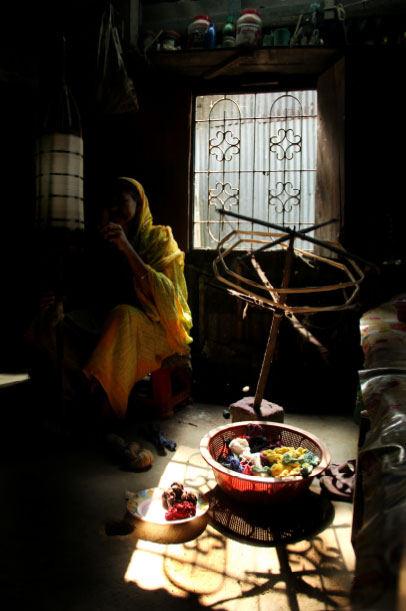
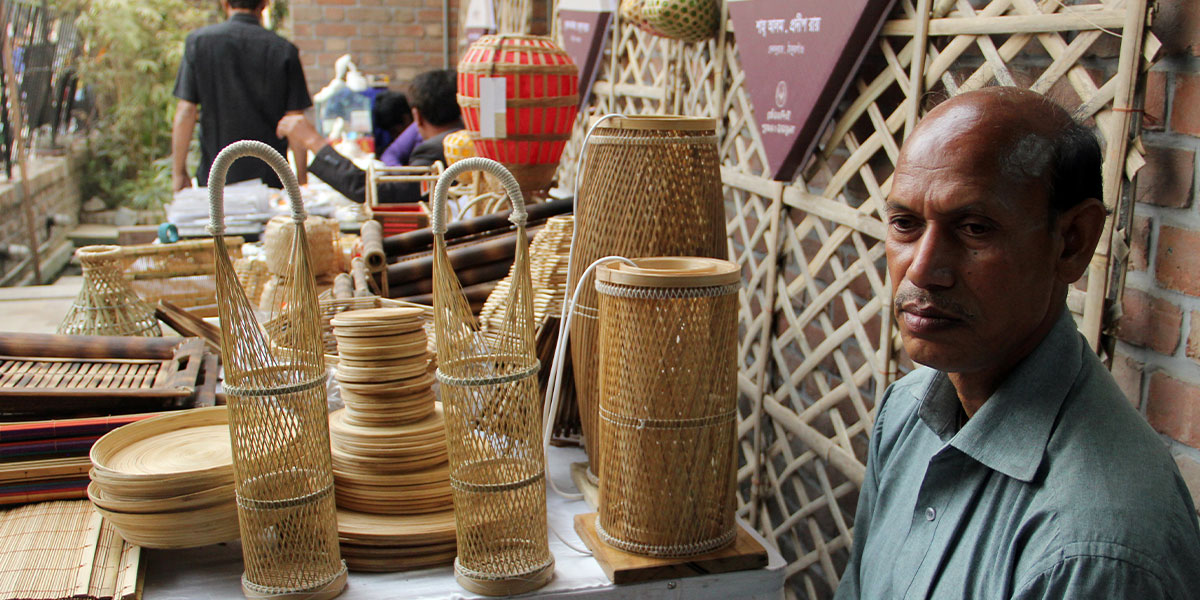
This very important initiative to update date from craft surveys done more then two decades ago was undertaken by National Crafts Council of Bangladesh from April to July, 2009. While its objective is to document different crafts and craftspeople of the entire country in Phase 1 it only covered Dhaka, one of the six administrative divisions. This survey was sponsored and financed by UNESCO. The survey was led primarily by Md. Sirajuddin and Shahid Hussain Shamim of NCCB
Bangladesh has a prosperous history in craft sector. From ancient time whose profession was determined by their ancestors associated themselves in different sectors of arts and crafts. From generation to generation people choose their forefathers occupation for themselves. Some of these occupations remained unchanged for a long time and some changed with the flow of time. In recent time it can be seen that these family occupations have changed a lot in nature. People’s conservative viewpoints towards these family occupations have reduced, but they are associating themselves with new occupations and arts. Thus in one hand many sections related to arts and crafts are changing in nature and on the other hand newer forms of handicrafts are emerging. In order to understand the recent situations of the crafts sector of Bangladesh UNESXO and National Crafts Council of Bangladesh jointly conducted a research on nine districts of the Dhaka division. The districts are Dhaka, Narayangang, Gazipur, Manikgang,Tangail, Munshigang, Narshingdhi, Jamalpur, Sherpur. The purpose of the study was to understand the recent situations of the craftsmen lining in these areas and to generate an assumption about the number of craftsmen living here. For this purpose a team consisting of one consultant, one team leader, one researcher, nine territory caretaker and forty five data collectors conducted the study for four month. This study was founded by UNESCO and the management was done by the National Crafts Council of Bangladesh.
Research methodology and territory A study was conducted under National Crafts Council of Bangladesh on nine districts of Dhaka division. Based on the data accumulated by the survey, a report was created. In this report a list of craftsmen, some table and statistical information were highlighted. Based on this list the nature of art and crafts; sources of raw materials , design, market situation and dissatisfaction level towards the occupation can be understood.
Several strategies were followed for the research purpose. They are as follows:
Field work was conducted to make the research easier. Several methods were followed related to the purpose of the study and under these methods some relevant strategies were implemented. For example, by using historical method to understand the geographical condition and heritage, past research reports, book, reports, documents were studied.
For the purpose of collective information help was taken from many personals and organizations. Like Union Parishad Chairman, members, district/division representatives, teachers of different educational institutions, reporters, development worker, BISCIC, Ayesha Abed Foundation, Probortona, Aarong, Kumudini Welfare Trust, Jagoroni Chokro Foundation etc.
To understand the conditions, locations, problems and how to solve them interviews were taken from artists entrepreneurs, designers and people related to the market system.
Group discussion was held to understand the socioeconomic condition of the craftsmen.
Pictures were taken from the craftsmen’s production process, raw materials processing, usage of tools eic.
Researcher’s data was used by objective sampling.
Consultancy was taken from experienced and expert researcher and statistician.
Research purpose and objectives:
Research result: Keeping in mind the objectives mentioned above the following results were found by the study,
Investigative Report : Based information can be found be based on the report. Though this information’s validity or authenticity is correct for the present time but may change with the flow of time. It is quite natural that based on the occupation change of the craftsmen, new industry development, migration system and other factors of the market will change the information in the future. But for the time being these information can be accepted because the information were directly collected for the purpose of the study. The information that were gathered during conducting this research are mentioned below. It had been found in the research that the total number of craftsmen in Dhaka division is 14,217, out of this 2641 are male and 2217 are female. The ratio of men and women is 54.36% male and 45.63% is female. Total number of families was 11874 and total number of interviewers was 4858. The research was conducted on 451 villages and areas of the Dhaka division. 34.17% of the total population of craftsmen was interviewed.
The National Crafts Council of Bangladesh (NCCB), also known as Bangladesh Jatiya Karushilpa Parishad, founded in 1985, is the apex organization dedicated to the promotion, research, and preservation of traditional crafts in Bangladesh.
Any Bangladeshi citizen involved in the promotion, practice, development, preservation, or research of folk arts and crafts may be eligible for membership, subject to approval by the Governing Council.
NCCB offers Individual Membership, Organizational/Institutional Membership, Life Membership, and Associate Membership.
Applicants can apply for membership when invited by the Governing Council. Applications are reviewed by the Standing Executive Committee and approved by the Governing Council.
The membership fee is determined by NCCB and may vary depending on the category of membership.
Members gain opportunities for networking, participation in fairs and exhibitions, marketing support, international recognition platforms, and eligibility for NCCB awards.
Executive Committee members are selected or elected according to NCCB’s governing rules from among its approved members.


House 1, Road 5, Block A,
Satmasjid Housing Ltd, Mohammadpur,
Dhaka -1207, Bangladesh
craftscouncilbangladesh@gmail.com
Copyright © 2025. All rights reserved by NCCB. Designed and developed by Techka Studios
ন্যাশনাল ক্রাফ্টস কাউন্সিল অব বাংলাদেশ (NCCB), বা বাংলাদেশ জাতীয় কারুশিল্প পরিষদ, দেশের ঐতিহ্যবাহী কারুশিল্পের উন্নয়ন, গবেষণা ও সংরক্ষণে কাজ করা একটি শীর্ষস্থানীয় সংগঠন। এটি ১৯৮৫ সালে প্রতিষ্ঠিত হয়।
বাংলাদেশের যে কোনো নাগরিক, যারা লোকশিল্প ও হস্তশিল্পের উন্নয়ন, তৈরী, সংরক্ষণ, প্রচার বা গবেষণার সঙ্গে যুক্ত, তারা গভর্নিং কাউন্সিলের অনুমোদন সাপেক্ষে সদস্য হতে পারেন।
বাংলাদেশ জাতীয় কারুশিল্প পরিষদে চার রকমের সদস্যপদ রয়েছে-ব্যক্তিগত সদস্যপদ, প্রাতিষ্ঠানিক/সংগঠন সদস্যপদ, আজীবন সদস্যপদ এবং সহযোগী সদস্যপদ রয়েছে।
গভর্নিং কাউন্সিল সদস্যপদের জন্য আবেদন আহ্বান করে। আবেদন স্ট্যান্ডিং এক্সিকিউটিভ কমিটি যাচাই–বাছাই করে এবং গভর্নিং কাউন্সিলের অনুমোদনের মাধ্যমে সদস্যপদ প্রদান করা হয়।
সদস্যপদের বার্ষিক ফি সদস্যপদের ধরন অনুযায়ী নির্ধারিত হয়।
সদস্যরা পেশাগত নেটওয়ার্ক গড়ে তোলা, মেলা ও প্রদর্শনীতে অংশগ্রহণ, বিপণন ও প্রচারের সুযোগ এবং দেশি এন্ড আন্তর্জাতিক বিভিন্ন পুরস্কার ও স্বীকৃতির জন্য যোগ্যতা লাভ করেন।
নির্বাহী কমিটির সদস্যরা সাধারণত সংগঠনের অনুমোদিত সদস্যদের মধ্য থেকে NCCB–এর নিয়ম অনুযায়ী নির্বাচন বা মনোনয়নের মাধ্যমে নির্বাচিত হন।